
Most Alberta operators already have a leak survey calendar: a round of visits at the plants and compressor stations, another at batteries and well sites, and a binder of results. The March 2026 edition of Directive 060 does not rewrite that calendar. It adds a new item to it, and the new item starts in 2030, which is close enough that budgets and contracts need to start allowing for it now.
What the new edition of Directive 060 says
The Alberta Energy Regulator released a new edition of Directive 060 on March 27, 2026, with Bulletin 2026-12. It replaces the June 2025 edition. The bulletin lists these changes:
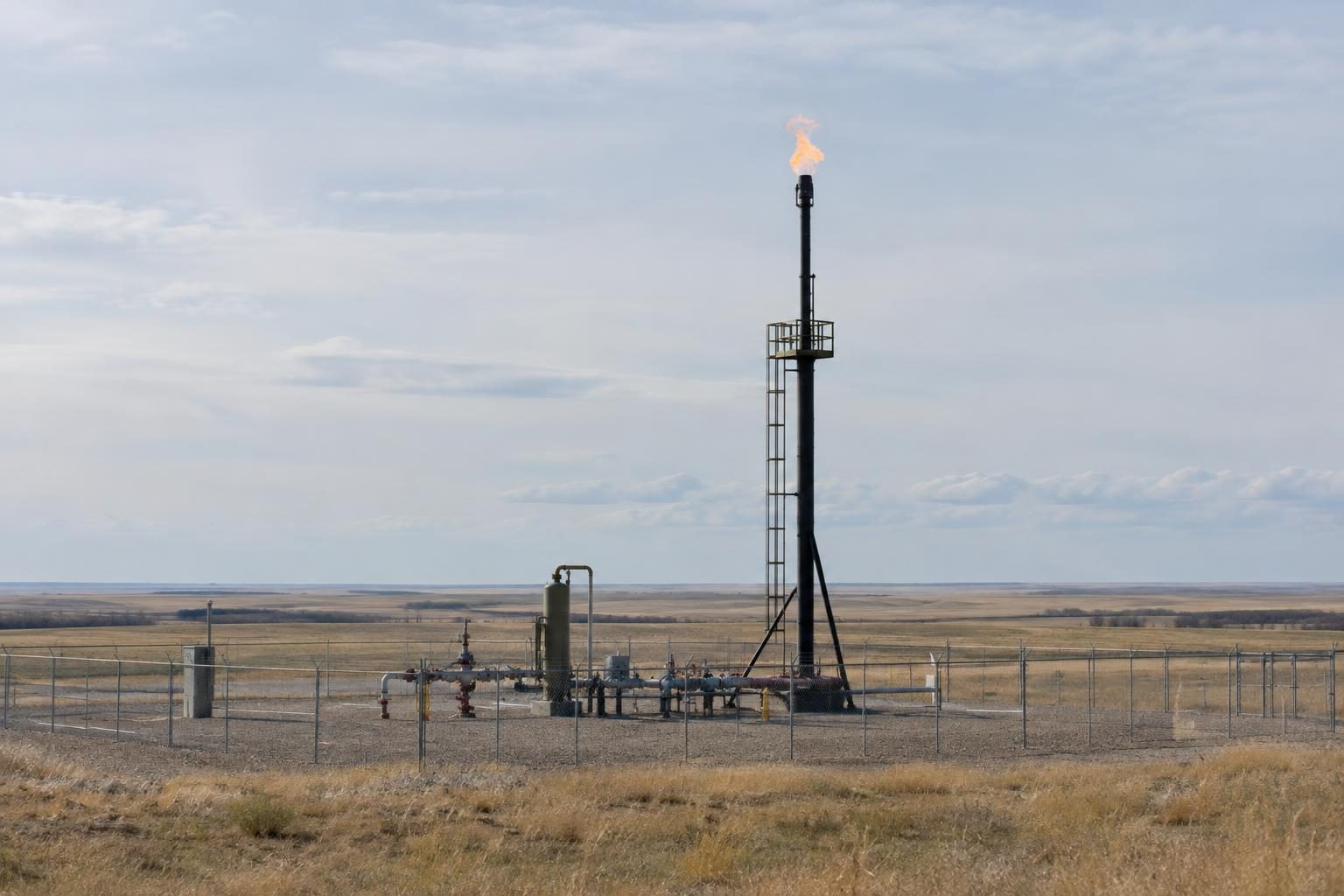
- Flare screening. From January 1, 2030, every active flare needs a fugitive emissions screening every two weeks. Flares with automatic or continuous ignition are exempt.
- Ignition. Flares installed, replaced or relocated on or after January 1, 2030 must have a system or engineered controls that provide automatic or continuous ignition, plus a preventive maintenance program for the stack.
- Unlit flare gas. From the same date, the volume of unlit flare gas is reported monthly.
- Records. Biweekly flare stack screenings and the related maintenance have to be kept as methane emissions records.
- Glycol dehydrators. Methane from units installed, replaced or relocated on or after January 1, 2030 must be conserved or controlled.
The bulletin speaks only about flares. It says nothing new about survey frequency at other facilities.
How it sits beside the existing survey schedule
The AER’s own requirement summary (current as of April 3, 2025, and provided for information only) still describes the baseline. Gas plants and compressor stations below 0.01 mol/kmol H2S, along with controlled liquid hydrocarbon and produced water tanks, get triannual surveys. Sour plants, batteries, terminals, injection and disposal sites and custom treating facilities get annual surveys, and well sites get annual screenings. The alternative route is a fugitive emissions management program built on the work practices in the directive’s tables. The AER’s Manual 016 explains how to build one. For comparison, the federal government’s guidance on its methane regulations covers the same leak detection and repair ground nationally, and the Petroleum Technology Alliance Canada keeps a page of Alberta methane detection research that is useful when comparing survey methods.
That means the flare rule is a frequency problem more than a technology problem. A survey crew that visits a battery once a year is now expected, for any flare that is not auto-ignited, to have someone look at it 26 times a year, and to be able to show the record.
Planning for the gap between now and 2030
Four years sounds generous until you count the work. A sensible order:
- List every active flare and mark which have automatic or continuous ignition. The exempt ones drop out of the biweekly schedule entirely.
- Decide who screens. Operators often split this between field staff for the routine visit and outside crews for the instrument-based survey. Many companies bring in outside LDAR services for the instrument work and keep the biweekly walk-around in house. Either is fine, as long as the record looks the same.
- Fix the record format now. A date, the flare, the person, the result and any maintenance follow-up. If it can be exported by facility, an audit question takes minutes instead of days.
- Check equipment replacement plans. A flare relocated or replaced after January 1, 2030 triggers the ignition requirement, so a project scheduled for late 2029 may be worth finishing before the date, or specifying with the new ignition system from the start.
What to confirm before relying on this
The bulletin summarizes the changes, but the directive text governs. Read sections 7.3, 8.6.3, 8.10 and 8.11 of the current edition against your own facility list, and confirm that the survey frequencies you are using came from the version in force today. The AER also notes that submissions using flare dispersion models must now use the updated model versions, a separate matter for anyone filing flare approvals.
None of this is difficult, but all of it takes lead time. The operators who treat 2030 as a calendar entry rather than a surprise will spend less on it.